Hydro Jetting vs Snaking: Which Clears Your Line Better
One tool bores a tunnel and the other washes the whole pipe clean. Compare snaking and hydro jetting for your Littleton line, job by job.
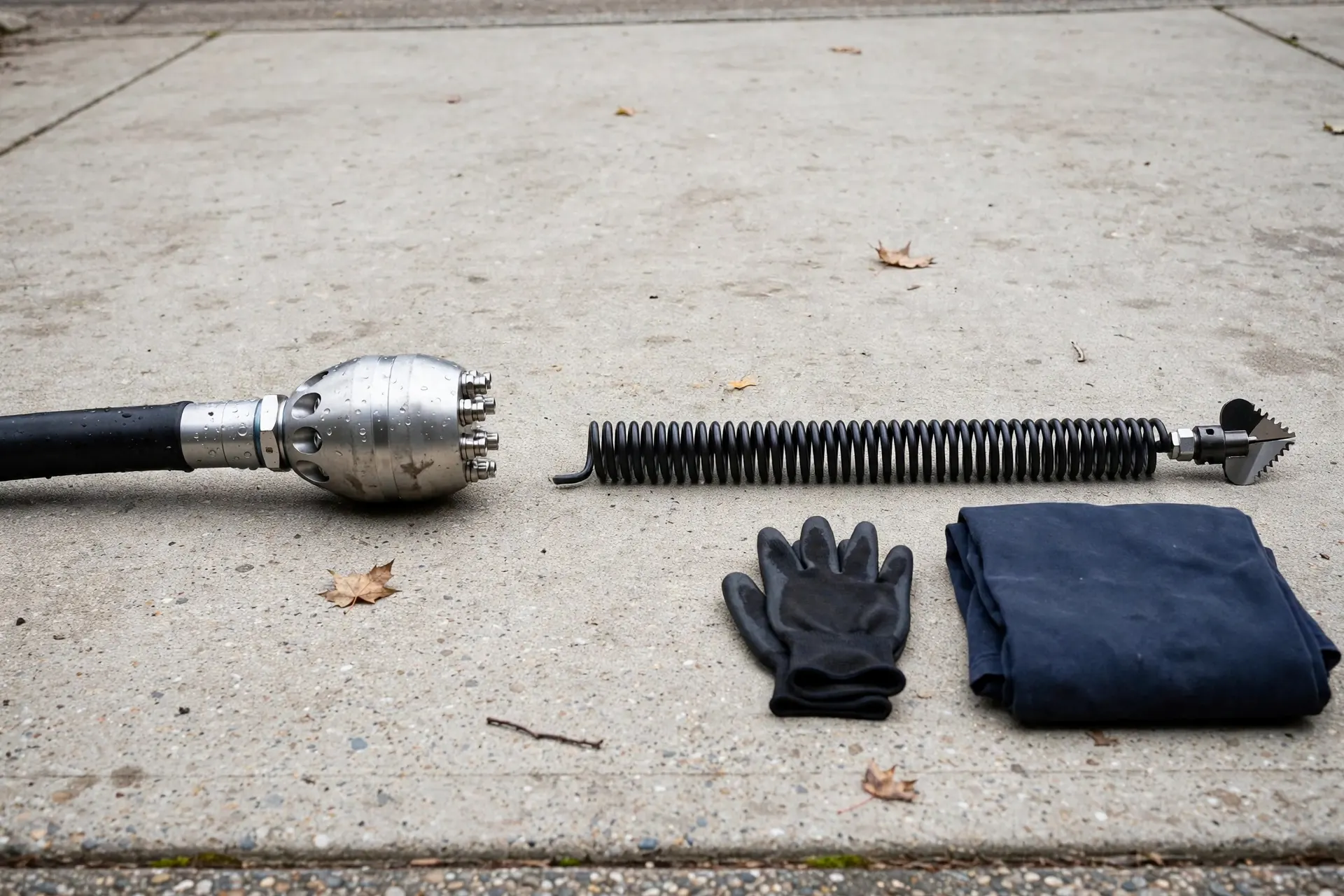
Your line is clogged, and two very different tools can open it. A snake bores a path through the blockage. A hydro jet washes the whole pipe clean. Both have a proper place in our work, and picking the wrong one either wastes your money on a clog that returns within weeks or pushes a tired pipe harder than it should be pushed. We are Littleton Sewer Backup Pros, and this post compares the two methods honestly, job by job.
How Snaking Opens a Path Through a Blockage
Snaking, also called cabling, feeds a rotating steel cable with a cutting head into your line until it meets the blockage, then chews or hooks its way through. It is fast, direct work that suits solid obstructions, such as a wad of wipes, a child toy at a bend, or a dense root ball at one joint. Our Drain Cleaning in Littleton visits often start with a cable because it restores flow quickly and tells us a lot by feel, including how far out the clog sits and how hard it is.
Understand what a snake leaves behind, though. The cable opens a hole through the middle of soft buildup and moves on, so grease, soap film, and scale stay coated on the pipe walls above and below the cleared spot. Flow returns, sometimes for months, but the rough coating catches fresh debris from the first day and the narrowing begins again.
How Hydro Jetting Cleans the Full Pipe Wall
Hydro jetting sends high pressure water through a hose with a nozzle that sprays in several directions at once, scouring the walls as it advances and flushing the loosened debris ahead of it toward the street. Our Hydro Jetting in Littleton work strips grease rings, soft scale, and sludge from the full inner surface, leaving the pipe close to its original width. Fine roots shredded by a cutter can also be washed out instead of staying lodged at a joint to regrow around trapped paper.
The result lasts longer on lines that clog from buildup rather than from a single object, because there is little left for new debris to catch on. Kitchen heavy homes along Santa Fe Drive, where cooking grease cools and coats the line year after year, feel the difference most.
Which Jobs Suit Each Method Best
Choose the snake for a sudden, hard stoppage with a likely solid cause, for a first look at a line we have never serviced, and for small branch drains serving one sink or tub. Choose the jet for repeat grease clogs, for lines that slow down gradually across the whole house, for clearing roots after cutting, and for cleaning a line before a camera inspection or a lining job, where a clean wall lets us see and measure the pipe properly instead of guessing through sludge.
A plumber in Lone Tree restaurant owner on a home line, and a busy family that called a plumber in Englewood line before us, both lived the same cycle of snaking every few months until a jet cleaning reset the pipe and ended the pattern. The lesson is not that one tool wins. It is that buildup problems need a cleaning tool, while obstruction problems need a boring tool, and your line will tell us which problem you have if we listen to its history.
How Pipe Condition Decides the Safer Choice
Pipe condition can overrule preference. A fragile, cracked, or heavily corroded line may not suit high pressure water until we know where its weak points sit, because the jet will find every loose joint and failed seam as it cleans. Clay pipes in older Littleton streets, shifted by years of clay soil movement and freeze and thaw cycles, deserve that caution before any powerful cleaning begins.
A sound modern pipe in good shape handles jetting well and benefits most from it. This is why we pair methods with inspection instead of selling one answer over the phone. The factors we weigh include pipe material and age, the number of past clogs, what the cable brought back on its head, and how your drains behave between visits. If the evidence says your pipe is frail, we will tell you plainly and suggest the gentler path, even when the stronger tool would be quicker for us.
How We Help You Choose for Your Line
When you call, tell us the history. How often the line clogs, which fixtures complain first, and what past cleanings brought up all steer the choice before we even open the cleanout. You see what we see, and the method follows from the footage rather than from a sales script.
Cost questions fit here too, and we answer them by factors rather than by guessing over the phone. The length of line to clean, the severity of buildup, access through a cleanout, and whether a camera check is part of the visit all shape the work. What we promise is a line diagnosed properly and cleaned with the tool that matches its condition. Call Littleton Sewer Backup Pros on (123) 456-7890 and describe your clog pattern, and we will bring the right equipment the first time.